Roofing Contractor in Redondo Beach, CA Built for Salt Air, Sun & Storms
Most South Bay roofs don't fail in a dramatic way. They fail slowly. Salt air eats galvanized flashing, year-round UV bakes the granules off shingles, and the June Gloom marine layer keeps decks damp long enough for rot to start. You usually don't find out until the first big atmospheric-river storm in November, when a drip shows up over the bedroom. Redondo Beach Roof Masters has been fixing those problems since 2005. We find the weak points before the rain does, then repair or replace them with materials that hold up in coastal conditions.
We know how roofs here differ from one city to the next. In Torrance and Gardena we're often tearing off three layers of shingles over 1950s skip-sheathing. In Hermosa Beach we're re-membraning roof decks on narrow walk-street lots with nowhere to park a dumpster. In Palos Verdes Estates we're relaying clay tile to Art Jury standards. In Carson, Lomita, and Compton we handle homes and commercial flat roofs alike, and we bring the same crews and the same standards to every job within our 20-mile service area.
- ✓Serving the South Bay since 2005
- ✓24/7 emergency roof repair and tarping
- ✓Bonded roofing contractor
- ✓Fully insured crews
- ✓Financing available
- ✓Residential and commercial roofing
- ✓20-mile service radius from Redondo Beach
Request Your Free Estimate
No obligation. Emergency service available.
Thank you — your request was sent!
A member of the Redondo Beach Roof Masters team will reach out shortly. Need help now? Call +1 (424) 704 91-44.
Why Redondo Beach and South Bay Roofs Need a Specialist
A roof in Redondo Beach has to handle salt spray, heavy UV, months of fog, and sudden winter downpours. On top of that, 15-plus building departments each have their own rules. Here's why a roof that would last 25 years inland can wear out much sooner near the coast.
Coastal Climate: Dry for Months, Then a Deluge
The South Bay gets only about 12–14 inches of rain a year, and almost all of it falls between November and March. It usually arrives in short, heavy atmospheric-river bursts after six to eight completely dry months. Cracked pipe boots or a lifted shingle can go unnoticed all summer, then leak in the first storm. In the meantime, May Gray and June Gloom bring long stretches of fog and condensation that feed moss and algae on north-facing slopes. Within a mile or two of the water, along the Esplanade, the Riviera, and the Strand, salt air corrodes standard galvanized nails, vents, and flashing years early. Fall Santa Ana winds lift shingles and loosen tile, and on the Palos Verdes Peninsula they also raise the risk of wildfire embers landing on the roof.
A Housing Stock Built Mostly Between 1945 and 1975
Most South Bay homes were built in the postwar boom. Torrance, Lawndale, Gardena, Hawthorne, Lomita, Carson, and North Redondo are full of single-story stucco ranch houses from the 1950s and 60s. Many still have their original spaced skip-sheathing, and some carry several layers of old shingles. Dingbat apartments and mid-century moderns have tar-and-gravel or modified-bitumen flat roofs. Three-story townhomes on 25–30 ft beach lots come with roof decks, parapets, and scuppers. The 1920s–30s Spanish Revival homes in Hollywood Riviera, Bixby Knolls, and Palos Verdes Estates have clay barrel tile, and the underlayment under that tile usually gives out after 20–30 years even though the tile still looks fine.
Permits, Fire Zones, HOAs, and Cool-Roof Rules
Almost every reroof here needs a permit, and each city runs its own building department: Redondo Beach, Torrance, Manhattan Beach, Long Beach, and so on. LA County handles unincorporated West Carson, and LADBS covers Harbor City and San Pedro. Title 24 often requires CRRC-rated cool-roof products in Climate Zone 6 and generally limits roofs to two layers. Much of the Peninsula is a Very High Fire Hazard Severity Zone, where Class A roofing is mandatory and wood shake is effectively phased out. Palos Verdes Estates sends roof material and color through Art Jury review, Rolling Hills requires association approval, and Hermosa and Manhattan have height limits that affect roof decks. SCAQMD rules also cap VOCs in roof coatings.
High Property Values and Insurance Pressure
With South Bay home values where they are, a roof is protecting a very expensive asset. Buyers ask for point-of-sale roof certifications, and in fire-prone parts of the Peninsula insurers are dropping or re-rating policies on older roofs. That pushes many homeowners toward Class A upgrades just to stay insurable. Owners here also expect premium materials, solid documentation, and clean job sites. A low-bid patch often costs more in the end.
Common Roofing Problems in Redondo Beach and the South Bay
After two decades of inspecting roofs from Manhattan Beach to Compton, we see the same problems over and over. They come from the coastal climate, the age of the homes, and the way these neighborhoods were built. Here's what to watch for and how urgent each problem is.
First-Storm Leaks and Active Water Intrusion Emergency
These are leaks that show up suddenly during the first heavy rain of the season. Water gets in through defects that formed quietly over a long dry summer: cracked pipe boots, slipped tiles, failed sealant, or lifted shingles. It then soaks insulation, drywall, and framing.
Why it's common hereSouth Bay roofs can go six to eight months without any rain, so nothing tests them. Sun and heat shrink sealants and crack rubber boots, and Santa Ana winds in the fall can loosen shingles. Then a November atmospheric river may drop an inch or more in a few hours. Every roofer in the region gets busy at once, so homeowners who wait for a drip often end up dealing with a backlog. That's why 24/7 response matters.
Signs you'll notice- Water stains spreading on ceilings after rain
- Dripping around light fixtures or skylights
- Damp or musty smell in the attic
- Bubbling paint on interior walls
- Wet insulation or darkened roof sheathing
- Water at window heads on upper floors
We get the most calls in the first two weeks after the season's first major storm. Older ranch homes in Gardena, Lawndale, and Torrance with aging shingle roofs top the list, along with stacked townhomes in South Redondo where a roof-deck leak runs down through two floors.
Our fix: Same-day emergency tarping or a temporary seal to stop the water. Then we trace the leak to its source and make a permanent repair once the weather clears.
Salt-Air Corrosion of Flashing and Metal Components Serious
This is rust and pitting on the metal parts of a roof: galvanized flashing, nails, vent caps, gutters, HVAC curbs, and chimney flashing. Once that metal corrodes, it stops shedding water at the most leak-prone joints on the roof.
Why it's common hereWithin a mile or two of the ocean, salt carried on the wind and the marine layer settles on every metal surface. Fog keeps that salt damp for hours at a time, which speeds up corrosion. Standard galvanized parts that might last 25 years in Hawthorne can fail in 8–12 years along the Esplanade, the Riviera, or the Hermosa and Manhattan Strand. Many builders and handymen still use inland-grade fasteners, so homes near the water often have flashing that's rusted through long before the roofing itself is worn out.
Signs you'll notice- Orange rust streaks on stucco or fascia
- Pitted or flaking vent caps
- Rust holes in valley or step flashing
- Leaks at chimneys or wall intersections
- Gutters rusting at seams and hangers
- Nail heads bleeding rust through shingles
This is most severe on oceanfront and ocean-view blocks in Redondo, Hermosa, and Manhattan Beach, and on exposed bluff homes in Palos Verdes. We also see it on HVAC curbs and rooftop equipment on beach-city condos and commercial buildings near the shore.
Our fix: We replace corroded flashing, vents, and fasteners with stainless steel, aluminum, or coated components rated for marine exposure, and we reseal every transition.
Failed Underlayment Under Tile Roofs Serious
Clay and concrete tile don't actually waterproof a roof. They shield the felt or synthetic underlayment beneath them, and that layer does the waterproofing. Once the underlayment dries out, cracks, or tears, water gets past the tile and reaches the deck, even if the tile looks perfect.
Why it's common hereMany Peninsula and Riviera tile roofs were installed 25–40 years ago with standard 30# felt, which typically lasts 20–30 years. UV heat builds up under the tile, and fog-driven moisture keeps cycling through. Ground movement in the Portuguese Bend area and seismic shaking along the Palos Verdes and Newport-Inglewood faults also crack tiles and open gaps. Homeowners usually see healthy tile from the street and assume the roof is fine.
Signs you'll notice- Broken or slipped tiles along eaves
- Leaks with no visible tile damage
- Brittle, crumbling felt at eaves or vents
- Daylight visible from the attic
- Rotted fascia and rafter tails
- Displaced ridge or hip tiles after wind
We find it most often on Spanish Revival homes in Hollywood Riviera, custom estates in Palos Verdes Estates, Rolling Hills, and Rolling Hills Estates, and 1920s–30s homes in Belmont Heights, Bixby Knolls, and parts of Inglewood.
Our fix: Lift-and-relay: we remove and stack the tile, install new high-temp underlayment and corrosion-resistant flashing, replace broken pieces, and reset the original tile.
Ponding Water and Failing Flat Roof Membranes Serious
Ponding means water sits on a low-slope roof for more than 48 hours after rain. It speeds up membrane breakdown, adds weight to the structure, and finds every weak seam. It's the leading cause of flat-roof and roof-deck leaks in the area.
Why it's common hereThere's a lot of flat roofing in the South Bay: dingbat apartments, mid-century moderns, old beach cottages, and newer three-story townhomes with rooftop decks. Over decades the decks sag, scuppers clog with leaves and sand, and the intense UV breaks down tar-and-gravel and torch-down roofs that haven't been recoated. Deck membranes under tile or pavers are especially hard to inspect, and on stacked units a failure can leak through several floors.
Signs you'll notice- Standing water a day or more after rain
- Blisters, bubbles, or alligatoring on the surface
- Open or lifted seams
- Clogged scuppers or downspouts
- Algae rings where water collects
- Leaks below roof decks or parapet walls
We see it constantly on Hermosa and Manhattan walk-street homes, South Redondo townhomes, and 1960s dingbats in Lawndale and Hawthorne. It also shows up on commercial and industrial roofs in El Segundo, Gardena, Carson, and the Compton industrial corridor.
Our fix: We correct drainage with tapered insulation or added scuppers, then install a new TPO, EPDM, or modified-bitumen membrane, or restore a sound roof with a silicone coating.
Worn-Out Shingles on Multi-Layer Tract Roofs Moderate
These are asphalt shingle roofs past the end of their life. They're curling, cracking, and losing granules. Many have been re-covered more than once over the original roof, which hides rot and adds weight the framing was never designed to carry.
Why it's common hereThousands of 1950s–60s ranch homes in Torrance, Gardena, Carson, Lomita, and North Redondo got overlays in the 70s, 80s, and 90s. Year-round South Bay UV cooks asphalt shingles, especially on south and west slopes. Many of these homes still have their original skip-sheathing, spaced boards that can't properly support modern shingles. Title 24 generally limits roofs to two layers, so another overlay usually isn't an option.
Signs you'll notice- Bare spots and granules in gutters
- Curled or cupped shingle edges
- Cracked or missing tabs after wind
- Wavy roofline or sagging between rafters
- Moss or algae on north-facing slopes
- Two or more layers visible at the eaves
This is the most common reroof we do in Gardena, Lawndale, Lomita, West Carson, and Torrance's postwar tracts. These jobs often reveal dry-rotted fascia and eaves, plus old solar or duct penetrations that were never flashed properly.
Our fix: Full tear-off down to the rafters, new plywood or OSB over the skip-sheathing, fascia repair, and new Title 24 cool-roof shingles with upgraded flashing.
Poor Attic Ventilation and Condensation Moderate
An attic without enough intake and exhaust airflow traps heat and moisture. In summer, shingles bake from below. During long marine-layer stretches, condensation builds on the underside of the deck, which rusts nails and slowly rots the sheathing.
Why it's common hereOlder South Bay homes were built with very little venting, and many of the vents they do have were painted over, blocked by insulation, or corroded shut by salt air. The coastal fog pushes humid air into attics for weeks at a time. Remodels often add bathrooms or kitchens that vent into the attic instead of outdoors. The result is premature shingle failure and moldy decking that you can't see from the street.
Signs you'll notice- Rusty nail tips poking through the deck
- Black staining or mold on sheathing
- Musty smell in upstairs rooms
- Very hot upstairs rooms in late summer
- Frost-like moisture on the deck on cool mornings
- Peeling exterior paint near the eaves
We find this most in 1950s ranch homes in Hawthorne, Gardena, and Torrance, and in beach cottages near the water in Redondo and Hermosa where the fog lingers longest.
Our fix: We balance intake and exhaust venting with soffit, ridge, or low-profile vents, clear blocked vents, and reroute bath fans to the exterior.
Clogged or Corroded Gutters and Skylight Seal Failure Minor
These are smaller problems that grow into bigger ones: gutters that overflow, sag, or rust out, and skylights whose seals or flashing have shrunk and cracked. Both send water where it shouldn't go, often into fascia, eaves, or ceilings.
Why it's common hereSand, palm debris, and jacaranda litter clog South Bay gutters, and salt air corrodes steel gutters near the coast. Because rain comes so rarely, nobody notices a clogged gutter until it overflows in a storm. Older skylights from the 1980s and 90s have curb flashing and gaskets that UV has cracked over the years.
Signs you'll notice- Water spilling over gutter edges
- Gutters pulling away from fascia
- Rust spots or holes along seams
- Drips or stains around skylight frames
- Condensation or fogging between skylight panes
- Peeling paint on fascia boards
Common on homes in Lomita, Torrance, and Rolling Hills Estates with mature trees, and on beach homes in Redondo and Manhattan where salt eats steel gutters and wind-driven rain finds old skylight seals.
Our fix: Gutter cleaning, repair, or replacement with seamless aluminum. Skylight reflashing, resealing, or replacement with a new curb-mounted unit.
Roofing Services for South Bay Homes and Businesses
We offer everything from a single cracked tile to a full commercial reroof. We pick materials and methods for the coastal climate and the specific building, whether that's a Gardena ranch home, a Hermosa roof deck, or a Palos Verdes clay tile estate. Here's what each service involves and who it's best for.
Roof Repair, Roof Patching & Roof Damage Repair ⭐ Specialty
We find the actual source of a leak, which is often several feet from the stain on your ceiling, and repair it permanently. That covers patching damaged areas, replacing broken shingles or tiles, resealing penetrations, and fixing rotted decking underneath.
Our approachWe test with water where needed, inspect the attic, and check every flashing transition. Repairs near the coast use stainless or coated fasteners and marine-grade sealants so the fix holds up longer than the roof around it.
In Redondo Beach, CAOur most common repairs: cracked pipe boots after a dry summer, slipped tiles in Hollywood Riviera, wind-lifted shingles after Santa Anas, and corroded flashing along the Esplanade. We also fix leaks at old solar mounts on Torrance and Carson homes.
Best for: Roofs with solid life left and a specific, isolated leak or damaged area. Also a good fit for homeowners who need a fast, documented fix before listing or before the rainy season.
Emergency Roofing Services, Emergency Roof Tarping & Storm/Wind Damage Repair ⭐ Specialty
Our 24/7 emergency service stops active leaks. We tarp exposed areas, seal blown-off sections, and secure loose tile or flashing during and after storms and Santa Ana wind events. Then we come back for permanent repairs.
Our approachWe weight and fasten heavy-duty tarps so they don't tear the remaining roofing, photograph the damage for your insurance claim, and dry-in the opening. Permanent repairs follow once the weather clears.
In Redondo Beach, CADemand jumps the minute a November atmospheric river arrives and every roofer in the South Bay is busy. Our around-the-clock response limits drywall, insulation, and flooring damage, which matters most in stacked beach townhomes where water travels down multiple floors.
Best for: Anyone with water coming through the ceiling, a roof opened up by wind, a fallen limb, or storm-damaged tile, any time of day or night.
Roof Replacement & Roof Installation
Complete tear-off and new roof installation on homes and buildings: removing old layers down to the framing, repairing sheathing and fascia, and installing a new code-compliant roof system with new flashing, underlayment, and ventilation.
Our approachWe pull permits in your city, sheath over skip-sheathing, use Title 24 cool-roof products where required, and coordinate solar removal and reinstall with SCE. We protect landscaping and clean up magnetically every day.
In Redondo Beach, CAIn Gardena, Lawndale, and Lomita this usually means multi-layer tear-offs and new plywood. In Hermosa and Manhattan we plan around walk streets, tight staging, and encroachment rules. On the Peninsula we meet Class A fire-zone requirements.
Best for: Roofs at the end of their life, with multiple layers, widespread leaks, or failed decking. Also for homeowners preparing to sell or keep their insurance.
Residential Roofing & Commercial Roofing
Full-service roofing for single-family homes, condos, townhomes, apartment buildings, retail, offices, and light industrial buildings. That includes repairs, replacements, coatings, and ongoing maintenance programs.
Our approachFor homes, we focus on curb appeal, HOA compliance, and clean job sites. For commercial clients, we schedule work around operations, document conditions for property managers, and choose systems based on budget, roof traffic, and rooftop equipment.
In Redondo Beach, CAWe work on homes from Rolling Hills estates to Compton bungalows, and on commercial roofs across the El Segundo, Torrance, Gardena, Carson, and Compton industrial corridors, where aging built-up and foam roofs need restoration or new membranes.
Best for: Homeowners, HOAs, landlords, and commercial property owners who want one bonded, insured contractor for every roof they own.
Flat Roofing: TPO, EPDM & Rubber Roofing
We install and repair low-slope roof systems, including heat-welded TPO, EPDM rubber, and modified bitumen, on homes, roof decks, apartments, and commercial buildings. We correct ponding and drainage problems at the same time.
Our approachWe add tapered insulation for positive drainage, enlarge or add scuppers, flash parapets carefully, and use reflective cool-roof membranes that meet Title 24. Roof decks get walkable protection layers.
In Redondo Beach, CAPerfect for South Redondo townhomes, dingbat apartments in Lawndale and Hawthorne, and modern rebuilds in Manhattan Beach. We work within Hermosa and Manhattan height limits when deck or parapet details change.
Best for: Flat or low-slope roofs with ponding, blistering, or recurring leaks, and roof decks over living space.
Tile, Slate & Cedar Roofing
We install, repair, and lift-and-relay clay tile, concrete tile, and slate roofs. We also maintain existing cedar roofs or convert them to Class A fire-rated materials where wildfire rules require it.
Our approachWe hand-sort and reuse salvageable tile, install high-temperature synthetic underlayment, and use stainless or copper flashing. Heavy roofs get structural checks for seismic attachment and load.
In Redondo Beach, CAThese are core services in Palos Verdes Estates (with Art Jury submittals), Rolling Hills, Rancho Palos Verdes, and the Hollywood Riviera. Portuguese Bend ground movement and fire-zone shake conversions add steps we're used to handling.
Best for: Spanish Revival and Mediterranean homes, custom estates, and owners of aging shake roofs in Very High Fire Hazard Severity Zones.
Shingle Roofing & Metal Roofing
We install architectural asphalt shingles and standing-seam or other metal roofing systems, including cool-rated colors, upgraded underlayment, and integrated solar-ready layouts.
Our approachFor shingles, we use high-wind nailing and algae-resistant cool-roof shingles. For metal, we choose aluminum or coated steel panels, fasteners, and trim suited to how close the home is to salt air.
In Redondo Beach, CAShingles are the go-to for postwar ranch homes in Torrance, Carson, and Gardena. Standing-seam metal works well on modern Manhattan and Hermosa rebuilds and pairs cleanly with solar arrays.
Best for: Homeowners who want long-lasting, budget-appropriate roofing. Metal is a good pick for contemporary designs and anyone planning solar.
Roof Coating & Roof Rejuvenation
We restore sound flat and low-slope roofs with silicone or elastomeric coatings. Where it makes sense, we also rejuvenate weathered roofing to extend its life, which can postpone a full replacement for years.
Our approachWe power-wash, repair seams and blisters, prime, and apply SCAQMD-compliant low-VOC coatings at the specified thickness. Reflective coatings lower rooftop temperatures and can help meet cool-roof standards.
In Redondo Beach, CAThese are well suited to UV-beaten torch-down and foam roofs on El Segundo, Gardena, and Carson commercial buildings, and to sun-exposed flat roofs on South Bay apartments.
Best for: Structurally sound roofs with surface wear, owners looking to defer capital expenses, and buildings that need lower cooling loads.
Roof Inspection, Roof Maintenance and Roof Estimates & Quotes
Detailed roof inspections with photos and written findings, scheduled maintenance visits, and itemized estimates. Useful for home sales, insurance renewals, or pre-storm checkups.
Our approachWe walk the roof where safe, inspect the attic, check flashing, vents, and drainage, and give you a prioritized list: what's urgent, what can wait, and what it costs.
In Redondo Beach, CAWe recommend a fall inspection before the November rains, especially for coastal homes with metal components. We also inspect for point-of-sale roof certifications across Redondo, Manhattan, and Palos Verdes.
Best for: Buyers, sellers, property managers, and anyone who wants to catch problems before the first big storm.
Attic Venting Installation & Repairs and Loft Ventilation
We design and install balanced attic and loft ventilation, including soffit intake, ridge vents, and low-profile exhaust vents. We also repair or replace corroded, crushed, or blocked vents.
Our approachWe calculate net free vent area for your attic, clear blocked soffits, use corrosion-resistant vents near the coast, and route bath and kitchen fans to the exterior.
In Redondo Beach, CAThese fixes are most valuable in fog-prone beach cottages and 1950s homes in Hawthorne and Torrance, where trapped moisture rusts nails and overheated attics shorten shingle life.
Best for: Homes with musty attics, condensation, hot upstairs rooms, or shingles aging faster than they should.
Gutter Installation & Gutter Repairs
We install seamless gutters and downspouts and repair leaking seams, sagging runs, and corroded sections so water drains away from the fascia, walls, and foundation.
Our approachWe use aluminum or other corrosion-resistant gutters near the coast, set proper slope, add hidden hangers, and size downspouts for the heavy, short bursts of rain typical here.
In Redondo Beach, CASteel gutters rust quickly in Redondo and Hermosa. Homes in Lomita and Rolling Hills Estates with mature trees need gutters that keep debris from clogging them.
Best for: Homes with overflowing, rusted, or missing gutters, or fascia rot along the eaves.
Skylight Installation, Skylight Repair, Skylight Leak Repair & Chimney Flashing
We install new skylights, fix leaking or fogged units, and reflash chimneys. These are some of the most leak-prone spots on any roof.
Our approachWe use curb-mounted skylights with factory flashing kits, step and counter flashing cut into masonry, and stainless or copper metal in salt-air zones.
In Redondo Beach, CAOur usual jobs are leaking 1980s skylights in Torrance and Palos Verdes homes and brick chimneys with rusted flashing in older Redondo, Inglewood, and Long Beach neighborhoods.
Best for: Homes with leaks around skylights or chimneys, and homeowners adding natural light during a reroof.
Our Roofing Process, From First Call to Final Cleanup
Every job follows the same five steps, so you always know what's happening, why, and what comes next. That holds whether it's a small repair or a permitted full replacement.
Inspection & Diagnosis
- Rooftop and attic inspection where safe access allows
- Photos of every problem area
- Moisture, flashing, ventilation, and drainage checks
- Discussion of your goals, budget, and timeline
Local note: We check closely for salt-air corrosion near the coast, failed underlayment under tile, and ponding on flat roofs and roof decks.
Written Estimate & Options
- Itemized quote with materials and scope
- Repair vs. replacement comparison when both make sense
- Notes on permits, cool-roof, and fire-zone requirements
- Financing options explained if you want them
Local note: Where it applies, we explain lift-and-relay vs. full tile replacement and Class A upgrades in Peninsula fire zones.
Permits & Approvals
- Permit filing with the right building department
- HOA, Art Jury, or association submittals when required
- Solar removal coordination with SCE if needed
- Staging and dumpster plan for tight lots
Local note: Palos Verdes Estates, Rolling Hills, and beach-city encroachment rules can add time, so we start paperwork early.
Installation or Repair
- Landscaping, walls, and driveways protected
- Tear-off, deck repair, and new sheathing as needed
- Underlayment, flashing, and roofing installed to code
- Daily cleanup and dry-in at the end of every workday
Local note: We use corrosion-resistant fasteners and flashing near the coast and plan around fog mornings and winter storm windows.
Final Inspection & Walkthrough
- Magnetic sweep for nails and full debris removal
- City final inspection scheduled and attended
- Photo documentation of the finished roof
- Walkthrough with care and maintenance tips
Local note: We'll note when your next maintenance check is due, ideally each fall before the rainy season.
Why South Bay Property Owners Choose Redondo Beach Roof Masters
Local Roofing Experience Since 2005
We've been working on South Bay roofs since 2005. In that time we've learned how different a roof three blocks from the Redondo Pier is from one in Gardena or up in Rolling Hills Estates. We know which neighborhoods have skip-sheathing under three layers of shingles, which Riviera homes have 1930s clay tile hiding worn-out felt, and how far inland salt-air corrosion really reaches. That local knowledge means more accurate diagnoses, fewer surprises once the tear-off starts, and materials picked for the conditions your roof actually faces, not a generic national spec.
Bonded and Insured on Every Job
Roofing is dangerous work, and it happens over very expensive property. Redondo Beach Roof Masters is bonded and insured, so you aren't exposed if something goes wrong on your roof. That matters on a three-story Hermosa townhome or a Palos Verdes estate as much as on a single-story Lomita bungalow. We're glad to provide proof of coverage before work starts. HOAs, property managers, and commercial owners often require it, and every homeowner should ask any contractor for it.
True 24/7 Emergency Roof Repair
When the first atmospheric river hits in November, half the South Bay finds out about their roof leaks at the same time. We answer emergency calls 24/7 and send crews to tarp, seal, and secure roofs damaged by storms, Santa Ana winds, or falling limbs. Stopping the water fast keeps a roof repair from turning into drywall, flooring, and mold remediation. We also document the damage with photos to support your insurance claim.
Every Roof Type, Under One Roof
Many roofers only do shingles. We handle asphalt, clay and concrete tile, slate, cedar, standing-seam metal, TPO, EPDM, modified bitumen, and silicone coatings, on homes and commercial buildings alike. That range matters in the South Bay, where a single street can mix 1950s ranch homes, modern flat-roof rebuilds, and Spanish Revival houses. Because we work with all of these materials, we can give you an honest recommendation instead of steering you toward the one product we happen to sell.
Coastal-Grade Materials and Details
Standard galvanized flashing and nails don't last near the ocean. Within a couple of miles of the water, we specify stainless, aluminum, copper, or coated components, marine-grade sealants, and corrosion-resistant vents and gutters. We also install Title 24 cool-roof products where required and high-temperature underlayment under tile. These details don't show from the street, but they make the difference between a roof that lasts and one that needs flashing work in eight years.
Clear Estimates and Flexible Financing
You get an itemized written estimate that spells out the scope, materials, and what's included: tear-off, sheathing, flashing, permits, and cleanup. If a repair will buy you several good years, we'll say so rather than push a replacement. When a full reroof is the right call, financing is available to spread out the cost, which helps when an insurance deadline or home sale doesn't line up with your budget.
We Handle Permits, HOAs, and Tight Job Sites
Between 15-plus building departments, Art Jury review in Palos Verdes Estates, Rolling Hills association approvals, fire-zone Class A rules, and beach-city encroachment permits, the paperwork can stall a project. We know the process in each city we serve and plan staging for narrow walk streets and lots with no driveway. You won't have to chase down approvals yourself.
A South Bay Roofing Contractor You Can Count On
Homeowners, HOAs, and business owners from Manhattan Beach to Compton have trusted Redondo Beach Roof Masters with their roofs since 2005, from emergency midnight tarps to full tile restorations on the Peninsula.
Bonded • Insured • 24/7 Emergency Roof Repair • Financing Available
Roofing Service Areas Across the South Bay and Beyond
From our Redondo Beach base we cover a 20-mile radius: the beach cities, the Palos Verdes Peninsula, inland South Bay, and the Harbor and Gateway communities. Each area has its own roof types, climate exposure, and permit office, and we know all of them.
Beach Cities
Palos Verdes Peninsula
Central South Bay
Harbor & Gateway Cities
Not sure if we cover your area? Call (424) 704-9144.
How Much Does a Roof Cost in Redondo Beach?
Roofing prices in the South Bay depend on the material, the roof's condition, access, and local code. Here are the main factors that set your price and some realistic ranges from typical local projects. Your written estimate will reflect your specific roof.
Roofing Material and System Primary Factor
Material choice has the biggest effect on price. Architectural asphalt shingles are the most budget-friendly. TPO and other flat membranes fall in the middle. Standing-seam metal, clay tile, and slate cost the most to buy and take more labor to install. Title 24 cool-roof versions and Class A fire-rated assemblies in Peninsula fire zones can add to the material cost, but they also qualify the roof for code compliance and may help with insurance.
Tear-Off Layers and Deck Condition Primary Factor
Many South Bay ranch homes have two or three layers of old roofing, and every layer adds labor and disposal fees. Homes with original skip-sheathing need new plywood or OSB across the whole deck. Dry-rotted fascia, eaves, and rafter tails, which are common on 1950s–60s homes in Gardena, Lomita, and Torrance, also add cost. We price these items clearly so the tear-off doesn't bring surprises.
Roof Size, Pitch, and Complexity Secondary Factor
Bigger roofs cost more overall, but complexity matters too. Steep Palos Verdes pitches need extra safety setups. Hips, valleys, dormers, skylights, chimneys, and roof decks each add flashing work. Three-story beach townhomes with parapets and scuppers take more detail than a simple single-story gable, even at the same square footage.
Access, Permits, and Approvals Secondary Factor
Narrow Hermosa and Manhattan walk streets with no dumpster space can mean hand-carrying materials and paying encroachment fees. Permit fees vary by city. Art Jury, HOA, or association review in Palos Verdes Estates and Rolling Hills adds design and paperwork time. Solar panel removal and reinstallation is a separate cost when panels are on the roof.
Coastal Upgrades Situational Factor
Homes within a couple of miles of the ocean benefit from stainless, aluminum, or copper flashing, corrosion-resistant fasteners, and upgraded vents. These parts cost a bit more than standard galvanized metal, but they often double the life of the most leak-prone details. That's worth it on Esplanade, Riviera, and Strand properties.
| Typical project | Details | Estimated range |
|---|---|---|
| Leak repair on a shingle or tile roof | Replace cracked pipe boots, reseal flashing, swap broken tiles or shingles; typical single-family home | $450 – $1,800 |
| Full shingle reroof on a postwar ranch home | About 1,600 sq ft single-story home in Torrance or Gardena; tear off 2 layers, new sheathing over skip boards, cool-roof architectural shingles | $14,000 – $26,000 |
| Tile lift-and-relay with new underlayment | About 2,200 sq ft clay or concrete tile roof in Hollywood Riviera or Palos Verdes; reuse tile, new high-temp underlayment and flashing | $20,000 – $42,000 |
| Flat roof replacement on a beach townhome | About 1,000–1,200 sq ft low-slope roof and deck in South Redondo or Hermosa; tapered drainage, new TPO membrane, scupper upgrades | $11,000 – $24,000 |
Financing is available for qualified customers. That makes it easier to replace a failing roof now, before the rainy season, a home sale, or an insurance renewal, instead of waiting until a leak forces the issue. In a market with South Bay property values, a properly built roof protects your largest asset, supports insurability in fire zones, and holds up under a buyer's inspection. Fixing it right once costs less than patching it every winter.
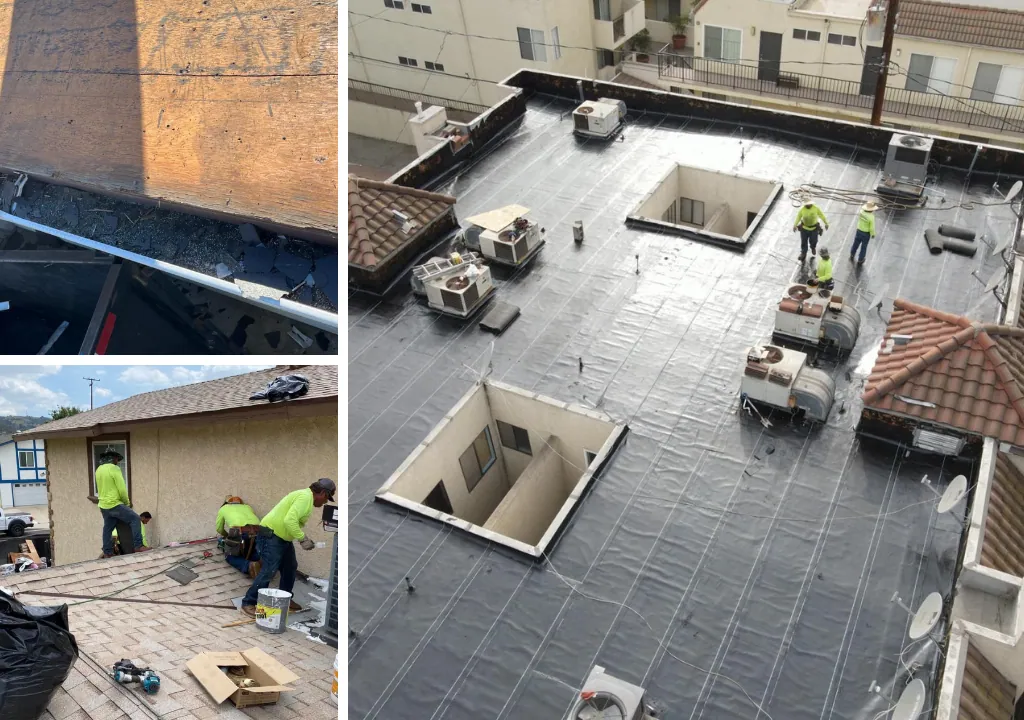
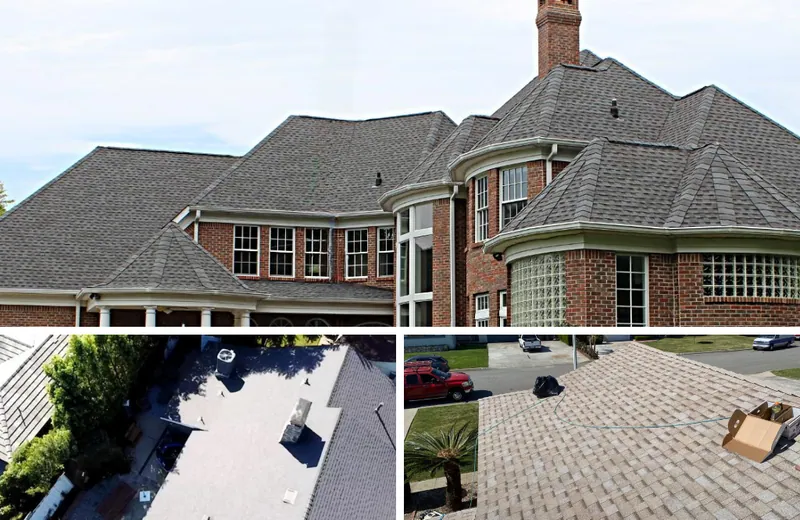
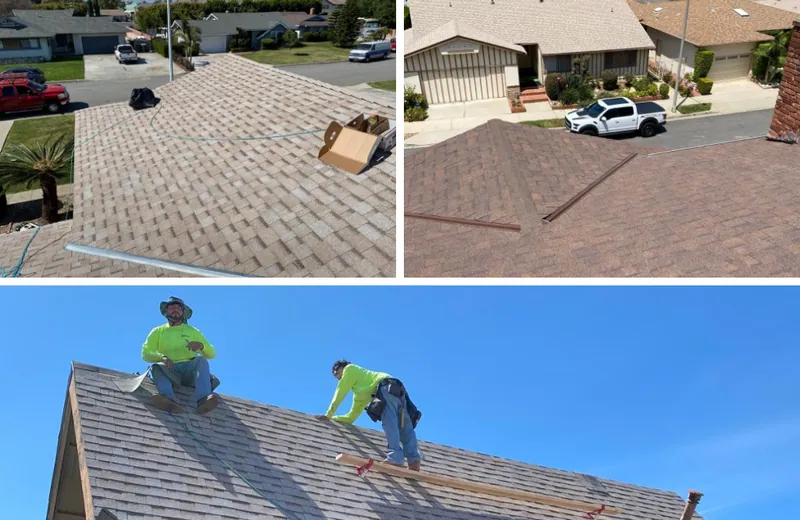
Recent roofing Projects in Redondo Beach, CA
Roofing FAQs for Redondo Beach and South Bay Homeowners
How much does a new roof cost in Redondo Beach?
Most single-family reroofs in the South Bay cost between about $14,000 and $45,000, depending mostly on material and condition. A full asphalt shingle tear-off on a 1,600 sq ft ranch home typically runs $14,000–$26,000. Tile lift-and-relay jobs on Riviera or Palos Verdes homes often land between $20,000 and $42,000, and new clay tile or slate costs more. Multiple old layers, new sheathing over skip-boards, solar removal, and tight beach-city access all affect the final price. We give you an itemized written estimate after inspecting your roof, and financing is available.
How long does a roof replacement take?
Most residential reroofs take 2–7 working days once materials are on site. A simple shingle roof on a single-story Torrance or Carson home may take two or three days. A large tile lift-and-relay or a complex flat roof with a deck can take a week or more. Permits and approvals often take longer than the work itself. Standard city permits can come through in days, but Art Jury review in Palos Verdes Estates or association approval in Rolling Hills can add several weeks. We seal the roof against weather at the end of every workday.
Do I need a permit to replace my roof in the South Bay?
Yes, almost always. Each city, including Redondo Beach, Torrance, Hermosa Beach, Manhattan Beach, Gardena, and Long Beach, requires a building permit and inspections for a reroof. West Carson goes through LA County, and City of LA areas like Harbor City go through LADBS. Title 24 may require cool-roof products and generally limits roofs to two layers. On the Palos Verdes Peninsula, fire-zone rules require Class A roofing. HOA, Art Jury, or coastal-zone rules may apply too. We handle the permit filing and attend the inspections.
Should I repair or replace my tile roof?
It depends on the underlayment, not the tile. Clay and concrete tile can last 50+ years, but the felt beneath usually wears out after 20–30 years. If leaks are isolated and the underlayment is still flexible, replacing broken tiles and resealing flashing may be enough. If the felt is brittle across the roof, a lift-and-relay is usually the best value: we remove the tile, install new underlayment and flashing, and reset your original tile. Full replacement makes sense when the tile itself is failing or when you're changing materials.
When should I call a roofer, and is it ever an emergency?
Call us right away if water is coming into your home, if wind has opened up part of your roof, or if a tree limb has hit it. Those are emergencies, and we respond 24/7 with tarping and temporary sealing. Book an inspection soon if you see ceiling stains, granules piling up in gutters, slipped tiles, rusted flashing, or ponding water on a flat roof. The best time to inspect is September or October, before the first big winter storm, when every roofer in the area gets busy.
How can I prevent roof leaks in a coastal climate?
Schedule a roof inspection and maintenance visit each fall, before the November rains. Clear sand, leaves, and palm debris from gutters and scuppers. Have pipe boots and sealants checked, because a dry summer cracks them. Near the beach, replace rusting galvanized flashing and vents with stainless or aluminum before they fail. Keep attic vents clear so marine-layer moisture can escape. On flat roofs and decks, watch for water that's still standing 48 hours after rain. Small, regular fixes cost far less than storm-season emergencies.
Do you work on flat roofs and roof decks in Hermosa and Manhattan Beach?
Yes. Flat roofs and roof decks are a big share of our beach-city work. We install TPO, EPDM, and modified-bitumen systems, correct ponding with tapered insulation, upgrade scuppers, and properly flash parapets and deck transitions. We're used to the logistics too: walk streets with no truck access, no dumpster space, encroachment permits, and height limits that affect any change to decks or parapets. For roofs that are still sound, a silicone coating can extend their life at a lower cost.
Can you help me keep my homeowners insurance in a Palos Verdes fire zone?
We can't speak for any insurer, but we help homeowners upgrade to the Class A fire-rated roofing that Very High Fire Hazard Severity Zones require. That includes converting old wood shake roofs to tile, Class A shingles, or metal, and adding ember-resistant vents. Insurers often look at roof age and material when renewing policies, so a documented, permitted upgrade can help. We also provide inspection reports and photos you can share with your carrier, and we handle Art Jury or association submittals in Palos Verdes Estates and Rolling Hills.
Serving Redondo Beach, CA & Nearby
Protect Your Roof Before the Next Storm
Don't wait for the first November downpour to find out where your roof is weak. Get a thorough inspection and an honest recommendation from a South Bay roofer that has been working here since 2005.
- ✓A detailed roof inspection with photos of what we find
- ✓An itemized written estimate with repair and replacement options
- ✓Coastal-grade flashing and fasteners where salt air demands them
- ✓Permits, HOA, and Art Jury paperwork handled for you
- ✓A bonded, insured crew and a clean job site every day
- ✓Financing available for larger projects
- ✓24/7 emergency response when water is coming in
⚡ Active leak or storm damage? Call any time, day or night, for emergency roof tarping and repair.
Bonded • Insured